What Is The Klease Method?
The Klease Method is a practical approach and governance framework for helping organisations bridge the gap between AI ambition and measurable business performance.
The Klease Method was developed in response to a growing challenge facing organisations across every industry: while AI adoption continues to accelerate, many organisations struggle to translate AI activity into measurable business outcomes.
Drawing on experience in enterprise transformation, operating model redesign, workforce capability and organisational performance, the Klease Method provides a practical approach for aligning strategy, work design, workforce capability, governance, technology and measurement around business outcomes
How the Klease Method Creates Competitive Advantage
The Klease Method is an integrated system designed to help organisations create and sustain value in an AI-enabled world.
Rather than treating transformation as a technology initiative, the Klease Method combines guiding principles, enterprise design, practical implementation processes and decision-support tools into a structured approach that moves organisations from insight to measurable impact.
Each layer plays a distinct role, but together they provide the foundation for sustainable performance and competitive advantage.
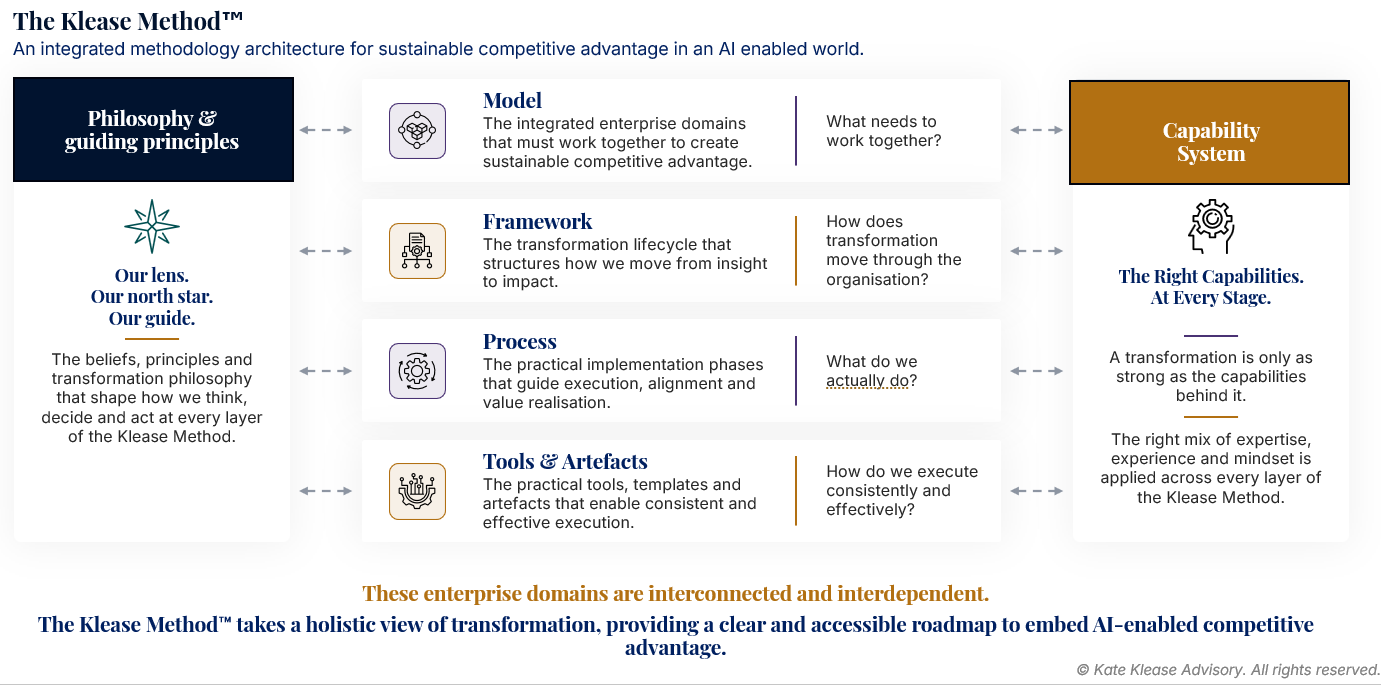
The Klease Method has been developed to support organisations implementing responsible and effective AI governance. The framework complements recognised governance approaches, including the Australian adoption of ISO/IEC 42001, by integrating leadership, governance, workforce capability, value realisation and organisational performance into a practical operating model.
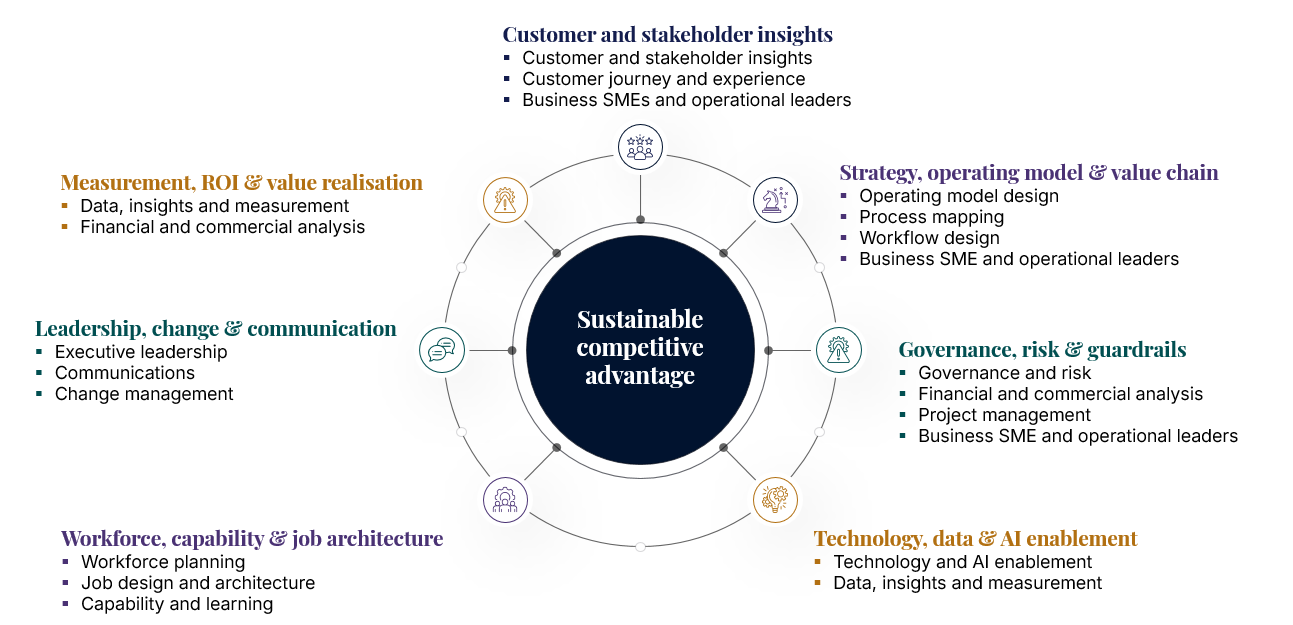
The Capability System Behind Sustainable Performance
Organisations do not create value through technology alone.
Sustainable performance emerges when multiple organisational capabilities work together as an integrated system.
The Capability System identifies the critical domains that determine whether AI investments deliver measurable business outcomes, including strategy, operating model design, governance, workforce capability, leadership, technology enablement and value measurement.
When these capabilities are aligned, organisations are better positioned to realise value, improve performance and maintain competitive advantage over time.
How The Klease Method Works In Practice
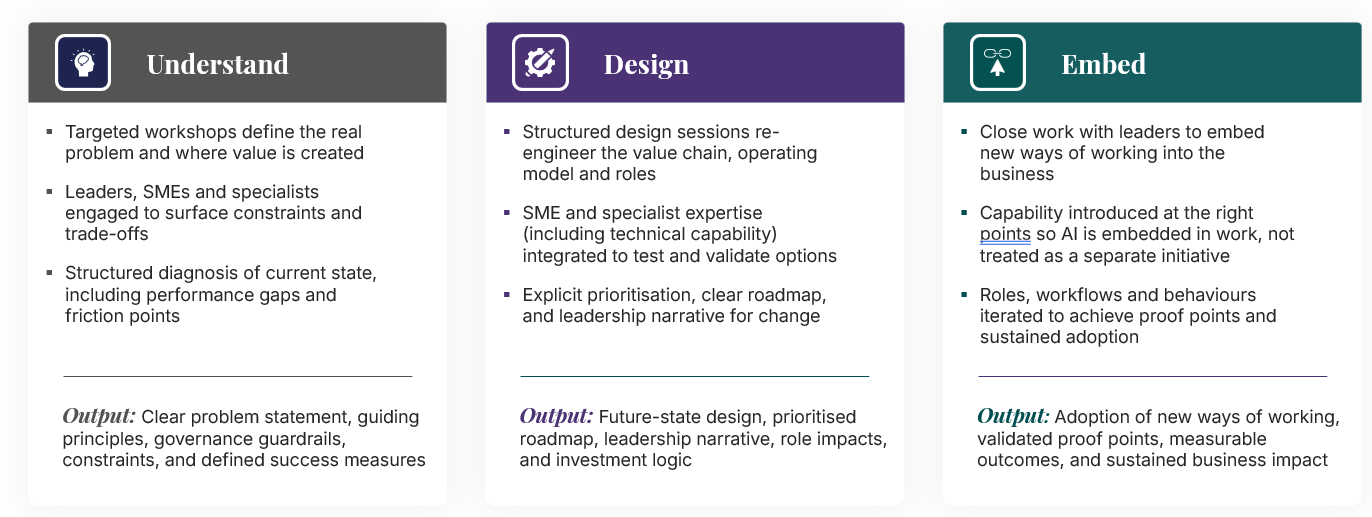
The Klease Method translates strategy into action through a practical three-stage transformation process.
It begins by understanding the real problem and the value that needs to be created. It then moves into the design of future-state operating models, work, roles and capability requirements. Finally, new ways of working are embedded through capability development, leadership alignment and organisational adoption.
This ensures transformation is not treated as a one-off initiative, but becomes part of how the organisation operates and creates value.
Assessing Maturity with the Klease Method AI Value Realisation Model
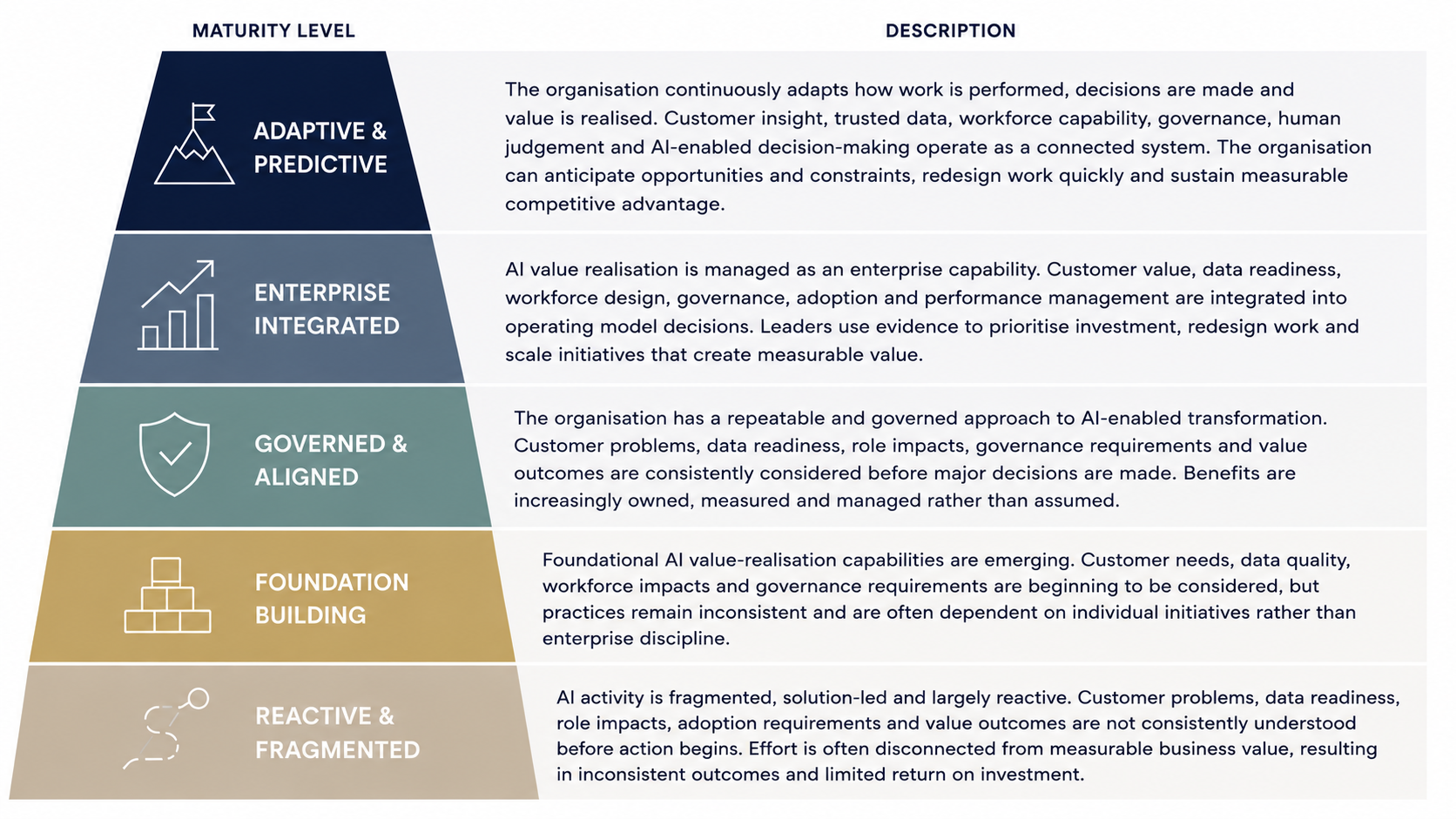
Not all organisations are equally positioned to realise value from AI.
The AI Value Realisation Model helps organisations understand their current ability to translate AI activity into measurable business outcomes.
The model assesses the organisational foundations, governance, capability systems and performance mechanisms required to move beyond experimentation and create sustainable value. As organisations mature, AI becomes increasingly integrated into decision-making, operations and performance management, strengthening resilience, adaptability and competitive advantage.
Understanding the model is one thing. Understanding where your organisation sits today is another.
The AI Value Realisation Diagnostic helps leaders identify their current level of readiness, uncover capability gaps and prioritise the actions required to strengthen value realisation and performance outcomes.
Looking For Practical Support?
Every organisation is different. If you're interested in exploring how the Klease Method can be applied within your organisation, let's start a conversation.